home

Friday, 23 October 2015

Expository documentary analysis; In the Closet- A Cosplay Documentary

This documentary is an expository documentary that looks into the life of a cosplayer, which relates to the topic I want to investigate for my own coursework. It goes on for 11 minutes, which is longer than my documentary but still follows the expectations, in which a short documentary can last between 2 - 30 minutes. The narrative follows a non-linear structure, where the footage jumps from the interviews to the convention and does follow any conventional structure. This documentary has used basic editing techniques expected to be used in a short documentary including cross cut editing and montage editing, and they have also used fade from the end clip into the credits;


In this GIF, you can see the editing has been used so the last clip of the documentary fades into the credits. This has been done to determine the ending of the documentary so the audience knows where the documentary finishes and the credits start.


This GIF shows the use of editing known as the montage sequence, in which there is a non-diegetic voice over during this brief sequence. Montage editing is where a sequence of clips have been collected together and shorted to create a sequence that sums up the topic being discussed, in which the clips shown above all relate to each other in terms of costuming, props and icon.

The music used for this documentary is upbeat and atmospheric, but isn't contingent and fades in and out of the documentary at times and is mainly used for the montage sequences. The audio mostly focuses on the dialogue, in which the dialogue from the interviews is diegetic and the voice over pieces are non-diegetic. By focusing on the dialogue rather than creating a mood and atmosphere then emphasises the focus and importance of the topic subject to the people being interviewed.

The interviews in this documentary have used a variety of shots including mid shots, medium close ups and close ups;


    MLS


    CU


 MS  


MCU


The questions asked in the interview are;

- What is cosplay?
- What got you into cosplay?
- Do you think the cosplay community is growing?
- Is cosplay a big part of a convention?
- Why do you like conventions?
- What are you cosplaying as?
- Why do you like cosplay?
- What's the cosplay community like?
- How do you balance cosplay with your everyday life?
- How is anime enforced into cosplay culture?
- What are cosplay competitions like?
- How easy is it for someone to compete at a professional level?

The documentary genre can be established as an expository documentary as It primarily focuses on persuading the audience about the benefits of cosplay and uses interviews, as previously shown in the interview screenshots. There is no voice over, which is often associated with expository documentaries, but there is also no presenter and the investigator is unknown and hidden out of shot during the interview sequences, in which the dialogue from the clips are diegetic, and any voices asking questions off camera cannot be heard. It sticks to the conventions of an expository documentary in which;

- The documentary uses a variety of footage and interview material which is assembled to support the topic case.
 - The editing is used for continuity, to link together images that support the argument put forward.
- The documentary uses interview shots from either a mid shot, a medium long shot or medium close up.
-The documentary uses incidental music in effect to the mood created (although this is not continuous and is only used during montage clips).

The documentary commonly uses iconography to represent the topic. The talking space in the interview locations is taken up by costumes, props (sewing machine) and anime posters all in which are iconic and associated with anime and cosplay culture with relate to the topic under discussion.

This documentary also uses costumes, props and mis en scene to reflect on cosplay culture;


This long shot shows a prop of a Dalek, which is iconic to the popular TV show Doctor Who. The use of this popular SciFi icon tells the audience more about cosplay culture, that its more than just anime and dressing up and subverts into sub genres and goes deeper.


This close up shows comic books within the mis en scene. Comic books are often associated with a particular target audience ("geeks"), in which by appealing to a particular target audience/fans of comic books tells the audience more about the depth to cosplay culture which adds to my previous point about sub-genres within the general genre of cosplay.


This mid shot shows a cosplayer being interviewed at the convention. It shows her in costume in a public location, in which shows the audience more about the variety of cosplay. The iconography of costumes is associated with cosplay as costumes are what make cosplay possible in which most of the cosplayers in this documentary where interviewed in their costumes, which emphasises the importance of costuming and how iconic it it for cosplayers.

The use of costume, location, props and mis en scene should appeal to the target audience. Showing the cosplayers dressed up in their outfits has an impact on the target audience as it shows them dressed up as character they may recognise and love from a film or anime, in which the audience feel more engaged with the documentary. Also, filming at comic con location appeals to the audience as it reflects on their interests, in which is may relate to sub genres associated with cosplay such as Sci-Fi and fantasy (e.g. Star Wars, Lord of The Rings, etc). These conventions reflect on that sub culture and so the audience then feel a part of the event and also feel more of a sense of pride in their interest.


By also using props and mis en scene, you can set the scene and create more of an iconic look into cosplay lifestyle, in which the audience sub consciously feel more engaged as it relates to their interests and hobbies. Things such as posters, figurines and comic books all engage with this iconic look that represents the genre, as well as sub genres in which may also interest the target audience (e.g. Dalek prop, Star Wars comic book, etc).

The text used in this documentary is bright and colourful and reflects upon the topic of the documentary;


This screenshot shots the title, in which is a part of an animated sequence. The titles are shaped to resemble clothing, in which relates to the documentary as its all about costuming and cosplay clothing. The colours used are bright and colourful, both in the text and the background which reflects on the bright and colourful nature of the topic.


The titles used in this interview shot reflect on the main titles, in that they are bright and colourful. These titles also use the same font as the main titles and the same colour scheme, in which the colour scheme for the main titles used a contrast of bright outstanding colours.


This screen shot shows a shot from the credits. The typography used it the same but there are no bright colours and it is just black and white and so doesn't stick to the colour scheme set. The credits use a range of pictures of people dressed in their outfits, and also crew members who filmed the documentary. This relates to the topic as by showing pictures of people in their cosplay costumes relates back to the iconography of cosplay culture and relates to the documentary topic.

Thursday, 22 October 2015

Expository documentary analysis; Dressed To Express - A Cosplay Documentary


This documentary is an expository documentary that looks into the life of a cosplayer. It lasts for about 18 minutes, which is longer than my documentary but still follows the conventions of a short documentary, in which a short documentary can last between 2 - 30 minutes. The narrative follows a non-linear structure, in which the order of the documentary does follow any conventional structure in terms of documentary as a documentary can be linear and non-linear. This documentary uses all the typical editing techniques expected to be used including cross cut editing and montage editing. They have also used other various editing techniques such as slow motion, zoom in/out and speeding up footage as well;

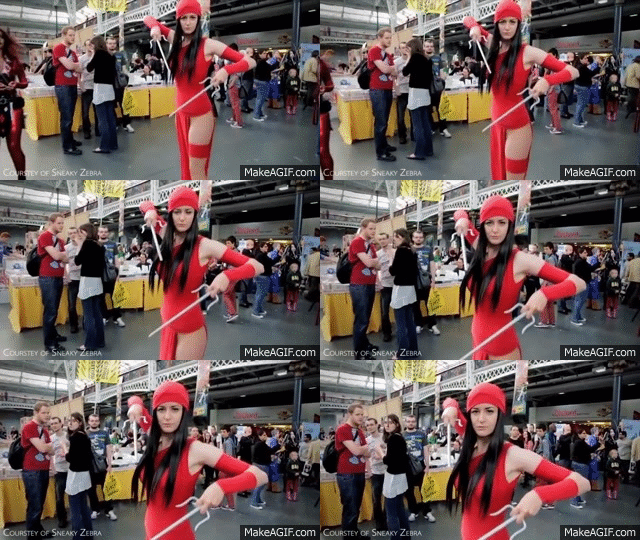
In this shot, they have speed up the footage and then slowed it down again for a dramatic effect. 

This GIF shows the camera zooming out of a photograph of a woman in cosplay. This has been created for a dramatic effect and so the audience can take in more of her outfit as well as the mis en scene.

This shot has used slow motion to create a more dramatic effect as posed by the woman in the cosplay outfit in the mis en scene. 

All these editing techniques have been used for effect to add to the mood and atmosphere created by the documentary. The incidental music in the documentary starts off very dramatic and intense and then becomes a lot calmer and more chilled as the documentary goes on. It starts off dramatic in the introduction to entice in the audience and gain interest into what the documentary is about, in which then as the score settles down and becomes more relaxed in the interviews, the audience have then settled into the documentary in which by using a relaxing vibe means the interviews give off a chilled tone and the audience can feel more relaxed and familiar with the people being interviewed.

In the interview shots, the camera has used mid shots and medium close ups, as well as talking space in some of the interviews that weren't done at the convention location;


MS (interview location)


MCU (convention location)


MS (convention location)


 MS (convention location)


MS (interview location)


In the interviews, the cosplayers are asked;

- What is your favourite cosplay?
- Why do you cosplay?
- How do you make a cosplay? 
- How important is accuracy?
- What is the cosplay community like?
- Can you become famous through cosplay?
- Can cosplaying get competitive?
- Whats the most important thing about cosplay?
- What's your favourite cosplay?
- What opportunities has cosplay given you?

The genre of the documentary has been established through camera, sound and editing. As it is an expository documentary, there is no narrator and the presence of the interviewer is unknown from the positioning of the camera angles in the interviewed, which focus primarily on the cosplayer interviewees. However, as heard in the sound audio from the shots, there is no voice over and the dialogue from the clips are diegetic, in which we cannot hear any voices asking questions off camera. It sticks to the conventions of an expository documentary in which;

- The documentary uses a variety of footage and interview material which is assembled to support the topic case.
 - The editing is used for continuity, to link together images that support the argument put forward.
- The documentary uses interview shots from either a mid shot, a medium long shot or medium close up.
-The documentary uses incidental music in effect to the mood created.

There is a lot of use of iconography towards the topic of the documentary. In the talking space at the interview location, there are costumes placed in the talking space provided, in which there are different costumes with different interviewees. This has been done to reflect on the cosplay culture in which is orientated around costuming, and it also reflects on the interviewee in what kind of characters they like to cosplay, which tells the audience more about their persona. 

The documentary uses costumes a lot to reflect on cosplay culture rather than mis en scene;


MCU


MLS


LS


MS


By heavily using costuming emphasises the importance of costumes towards cosplayers, in which costumes are then iconic towards cosplay. Majority of cosplayers in this documentary where interviewed in their cosplay outfits, and photos of them in various other costumes also emphasises the importance of costuming and how iconic it it for cosplayers.

By having the cosplayers being interviewed in their costumes and posing fort the camera in their costumes also shows that the topic is important to them and it appeals to their interests. By being unashamed and willing to be interviewed in a costume where in social circumstances they could potentially be judged shows that they have the dedication and the passion to do what they love and aren't afraid to show everyone else that they love to do it. 

The use of costume and location will also appeal to the target audience, particular an audience with an appeal to anime or cosplay culture. By showing the target audience the cosplayers dressed up in their outfits appeals to the audience as it may show that person dressed up as their favourite character from a film or anime, in which engages the audience more with the documentary if there is appeal. Also, filming at comic con location appeals to the audience as it is a convention that is associated to a group of people (cosplayers and "geeks") in which may be a location that is familiar and known well to the target audience which further appeals to the audience and creates further interest with the documentary. 

The text used in this documentary doesn't represent the documentary topic well, neither does it reflect on the mood created by the incidental music;


As shown from the screenshot, the titles are in a white font placed on a yellow and black background. The overall look it quite plain, which doesn't really reflect upon the colourful and exciting culture of cosplay, nor does it show an icons towards cosplay inspiration such as anime or marvel.


The titles used in this shot also don't represent the style, topic or mood of the documentary. The titles appear on a small yellow block in black text using the same colour scheme and font style as the main titles.


The credits used in this documentary use the same font and colour scheme except without the yellow. The credits relate more the documentary topic as they use images of the participants from the documentary dressed up in their cosplay outfits, in which refers back to the topic of cosplay.

Wednesday, 21 October 2015

Specific genre analysis - Pro Gamers | Syndicate the Superstar Streamer

This documentary is an observational documentary that follows the story about the success of a Youtube gamer called Tom.The running length of this documentary is around 3 minutes which is less time as my documentary is going to be and is produced/distributed by channel 4. The narrative of this documentary follows a linear structure and also uses various clips from the documentary as a introduction to the person being documented. This documentary has also used montage and cross cut editing in effect with the narrative.

The documentary uses a linear narrative as it follows the life of a YouTuber gamer, in which the clips used in the documentary have been set in order of the dialogue setting. In the montage clips, the clips are used as a response to what the gamer is describing in the dialogue which gives the audience a better idea about the narrative and so then follows a linear structure.This has also been used for the cross cutting, in which when the gamer is describing something in the interview, the camera then cross cuts to a different location where he is still describing what is going on in the non-diegetic voice over.

Using cross cutting adds more detail to the narrative and gives the audience a more coherent idea into what life is like for a successful YouTube gamer. The camera has gathered a series of clips from different locations so by combining together creates a more in depth narrative to show the audience of Tom's fame and success. For example, at the beginning of the documentary, Tom is being interviewed (MCU) and in the dialogue mentions how he built his own house out of the money he earned from gaming. The camera then cross cuts to a new location of a house (LS), in which the camera shows various shots of the house he built whilst he goes on to talk about it in the non-diegetic voice over.

Montage editing is a good way to show a variety of clips collected that relates to the topic in a short space of time. It is the technique of putting together separate sections of film to form a continuous sequence which shows the audience more of a variety about the lifestyle of being a famous gamer.

This documentary follows the conventional structure expected. It includes;

Titles and credits

This documentary uses the same text font, colour and background in both the titles and the credits and other titles used. The font is in big, white capitol letters which make the letters stand out on the screen and the titles use an animated sequence in which uses pixels to morph from the person being interviewed into the titles in which make the titles look digital and modern, and relates back to the subject of gaming which is associated with being modern and digital. The background is black and purple and is also animated, but the white typography stands out on the black background which stands out to the audience.

Interviews

Documentaries use interviews to inform the audience about a certain subject in which is described from people who are experienced in this topic area. This documentary has used a range of shots in the interviews for this documentary including medium close up's and have interviewed two people in this documentary, one of them is the YouTube gamer Tom and the other is the gaming director of the gaming festival. The interviews have also used "talking space", in which in the talking space provided in this interview you can see an office environment in which is associated with computers and technology which relates to the topic of gaming;


 MCU


MS 


CU


To obtain information about the subject, the investigator asks questions to the person being interviewed. In this documentary, you can't hear the investigator ask the questions however we can interpret from the interviewees response what they're being asked;

- How many followers do you have on social media platforms?
- What have you done with the money you've earned from your success?
- What is your name and what do you do?
- How did you achieve your fame and success?
- What is it like being recognised at gaming festivals and events?
- How long do you spend at these events?
- What are these events like in comparison to the past?
- Why do you think video games have become so popular?  


There are a total of 8 questions in this 3 minute documentary, which ideally is around the number amount of questions I will be asking in my short documentary which is slightly longer at 5 minutes.

Soundtrack/ incidental (non-diegetic) music

The incidental music used for this documentary is funky and upbeat, which has been created according to the mood of the documentary. It has a modern, upbeat sound which is suited to the documentary topic as video gaming and YouTube are modern concepts and also very digital, in which the incidental music gives off a very digital sound. The music is continuous and unchanging throughout the documentary, in which reflects on the mood created by the documentary. The mood is also reflecting on the gamer way of life which is seen as busy and stylish and the upbeat funky music then further reflects upon that.

 A range of clips relating to the documentary topic

Other than just using medium close up interview shots, this documentary has used a range of shots and locations to look into a pro gamer YouTuber star. They have used a range of camera angles and shots in order to show this to the target audience


This medium long shot has placed the pro gamer in the centre frame, in which yo can see the crowd in front of him. The importance of placing him in the centre frame shows he is the "centre of attention" (the main focus) which signifies his importance. The crowd in the background of this shot further supports this as it further shows his importance and tells the audience how successful he is as a YouTuber to attract an audience of that size.


This is a long shot, in which the pro gamer has been placed in the top corner of the screen. This shot shows game footage, in which the camera has put the pro gamer in the corner to get a reaction shot and also so the audience can still see the game being played. The purpose of this shot is to show the audience more about what pro gamer's do and also shows them what kind of games he plays as well to get a better idea about the lifestyle of a pro gamer.


This mid shot shows a price list for merchandise. Within the mis en scene, the audience can see the logo for Syndicate (the pro gamer) as well as the sub title "price list" and the listings for t-shirts and posters. The purpose of this shot is to tell the audience more about the success of the pro gamer, in which tells the audience more about his success. Merchandise is often associated with big brands or films/movies in which this tells the audience of syndicates success if he can afford his own merchandise.


This medium long shot shows a crowd of people. We can assume that these people are waiting for Syndicate as the camera then cuts to a mid shot of him taking photos with fans. This then tells the audience more about his success as its a shot of his fans waiting to meet him, which further tells the audience more about his personality and that he must be a nice guy if people dedicate their time waiting around to meet him. 


This medium long shot has put the pro gamer in the centre of the frame which once again shows that he is the centre focus of the shot. The man on his left is a security guard, in which we can see from his costume that he is wearing a black suit and tie and carrying a radio, all in which are iconic to the look of a security guard. This further tells the audience that the pro gamer is important and successful as he has his own security guard, in which people with security guards are seen as important as they need protecting.

This long shot is of a giant flat screen TV. it has put the TV in the centre frame, in which dominates the entire frame to show the audience how big it is. Big screen TV and technology are associated with being expensive, in which the purpose of this shot further tells the audience that Syndicate is successful as he can afford expensive things, in which being rich is often associated with success.

Changes in the music according to the mood created by the person interviewed

This documentary keeps up an upbeat and stylish mood throughout the documentary that reflects upon the gamer's way of life. Because of this, there is no need for a change in the incidental music and so it remains continuous throughout the entire film. 

Locations

There are numerous locations used in this documentary to reflect upon the lifestyle of a pro gamer including the interview location, the gaming festival and his own house;


This long shot has been filmed at his house. The purpose of using shots from his house location is to show the audience of his fame and success, that he can afford an expensive and modern house. In this shot, it shows a bar designed for alcohol, in which tells the audience he can afford to build unnecessary expensive things for the sake of having them. 


This extreme long shot has been filmed at a gaming festival. By using footage from a gaming festival shows Syndicates popularity and success and also gives an insight into the type of fans he would have and also gives the audience a better idea about gaming culture and what kind of people would it appeal to. In this shot, you can see Syndicate on a stage surrounded by crowds of fans, which further tells the audience about his fame and success being a YouTuber.


Tuesday, 20 October 2015

Specific genre analysis - The Black Lesbian Handbook | Stud | Channel 4 Shorts


This documentary is an observational documentary as it follows the life of the "Stud" lesbian. This can also be seen as a expository documentary as the investigator can be heard in the background of some of the interview clips and so their presence is known to the audience. The running length of this documentary is roughly the same length as my documentary is going to be and is produced/distributed by channel 4. 

The narrative follows a linear structure which also uses cross cut and montage editing. It uses a linear narrative as it tells a story about life being a lesbian stud, in which the clips used in the montage sequence and in the cross-cut editing follow in order of the dialogue setting. In the montage clips/cross cuts, there are clips that show a response to what the woman is describing in the dialogue which gives the audience a better idea about the narrative and so then follows a linear structure. There are no transition effects between each shot and so the camera cuts to new shots and locations without use of transition effects such as fade or dissolve.

By using cross cutting, it adds more to the narrative and gives the audience the wider picture into what the woman who's being interviewed life is about. The camera has collected a sequence from various location so by combining together creates a narrative in which when the woman being interviewed looks back upon her life and tells her story,, the camera then cross cuts over to a setting relevant to the topic e.g. when she talks about being shown around "the scene", it cuts to some shots of her and some of her friends at a club to show what "the scene" is to the target audience and to give them a better look into what life is like for the woman in the interview.

Using montage clips is a good way to show collective clips about the topic in a short space of time. a montage is the technique of selecting, editing, and piecing together separate sections of film to form a continuous whole and it shows the audience more of a variety about the lifestyle of being a black lesbian stud in the use of different shots pieced together to gain audience interest.

Titles and credits 

The documentary uses the same text font, colour and background in both the titles and the credits. The font is in big capitol letters and the titles use an animated sequence to make the titles look digital and modern, which reflects upon the subject under discussion (the stud lesbian) which is a new and unfamiliar concept to the target audience and so can be seen to be more modern and more accepted in society. The typography is white and the background is black so the white typography stands out more and is striking to the audience.

Interviews

Documentaries use interviews to inform the audience about topic from people who are experienced in this topic area. They have used a range of shots for the interviews including medium close ups, Mid shots and close ups as well as "talking space", in which in the talking space provided in this interview there isn't a lot to go by in terms of iconography as there is nothing you can really associate with a lesbian in terms of surroundings. There one person featured in the interviews, in which the documentary primarily focuses on their story and the life of being a black lesbian stud;


MS


MCU


  CU


Asking questions are an important process in the interviews, as to obtain information about the subject from the experts. Apart from the first shot in the documentary, you can't hear the investigator ask the questions and so we can interpret from the interviewees response what they're being asked;

- How many straight girls have you turned gay?
- What is a stud?
- Where were you living?
- How did you become a stud?
- What was it like growing up?
- What is it like now in comparison?
- What do you like about being a stud?

There are a total of 7 questions in this 3 minute documentary, which ideally is around the number amount of questions I will be asking in my short documentary which is slightly longer at 5 minutes.

Soundtrack/ incidental (non-diegetic) music

The incidental music used for this documentary is heavy and intense, which has been created according to the mood of the documentary. It has a modern sound which is driving and associated with urban rap, which is suited to the woman's personality in the sense of being quite tough linking in with the stud title. It also reflects on her costume, in which she is dressed in what is often associated as urban dress or men's style of clothing (e.g. cap, trousers, jacket, etc) and so the music is connected with her style and is then associated with her character.

Other music used in the piece is different and tranquil and emotional in contrast to the driving heavy music to start off with. This music is used to reflect on her past, in which in some of the shots we get close ups of pictures of her as a young girl in which the music reflects on her more emotional side as apposed to her tough, urban appearances;


CU, focused


 CU, eye level


CU, high angle


By using shots of her "before and after" shows the emotional changes she had to experience to become the person she is now, which is done through use of the piano in the incidental music which is calming and emotional to reflect upon her journey as a person. 

 A range of clips relating to the documentary topic

Besides using shots from the interviews at a medium close up, this documentary has used a range of shots and locations to look into the urban lifestyle of a stud lesbian. They have used a range of camera angles and shots as well as editing techniques to show life as a stud lesbian;

  
 This shot is a Mid shot and is motionless. They have used this shot to tell the audience more about the character of a stud. The iconography of the sunglasses in the mes en scene it associated with being "cool" or "tough" which reflects upon her personality and how she perceives herself to be. This works in contrast with the jacket, which again reflects on her tomboy style which is associated with a stud lesbian.


This shot is a Close Up and is also motionless. The use of makeup in terms of hairstyle in this shot tells the audience more about her being a stud, as her hair is short, in which the stereotypes of a woman with short hair associated with being a lesbian. Her hair is also being shaven in this shot, as shown from the prop of the razor, in which the shaven haircut is stereotypically seen as urban and "hardcore", in which further reflects on her personality and how she sees herself.

This shot is a mid shot from over the shoulder, in which shows the woman being interviewed interacting with people. This shot then tells the audience more about her social acceptance and the type of people she is accepted by. The other people in this shot are wearing hoodies and jackets, which is stereotypically associated with urban gangs and youth, which further tells the audience about her personality and way of life by the people she hangs out with. 


This shot is a two shot ranged at a close up. The purpose of this shot is to show the juxtaposition between two types of lesbians in a relationship as so the audience can then get a better idea of the "stud" lesbian in contrast to the more feminine or "lipstick" lesbian. In this shot, the woman on the right is wearing a baseball cap which is associated with urban culture and the kind of people who wear them are associated with urban culture and are typically male and seen as "hard" or "tough" which further tells the audience more about the character of a stud.

 This shot is a mid shot and uses low key, blue filtered lighting. The purpose of it is to look into a more social aspect of her life, in which you can tell from the mes en scene is a party scene. The filtered blue lighting shows this location uses different coloured lighting and so must be a lively scene. 

Most of the shots in this documentary, as shown from the screen shots above, use dark filtered lighting (almost black and white). The purpose of using black and white filtered is to create more of a tense atmosphere which sets a more serious tone to the documentary. This works well with the mood created, in which the woman takes her stud role very seriously and acts tough which reflects on her personality and the kind of person she needs to be to keep up this role.

 Changes in the music according to the mood created by the person interviewed 

 There are numerous changes in the incidental music which change depending on what mood is created by the woman being interviewed. As the woman discusses about being a stud and what it takes, the music is driving and urban, which reflects on her tone and also creates a 
serious and intense atmosphere to show the audience she is a tough character.

The music then changes as she talks about her struggles in the past. It becomes calming and emotional, in which the woman discusses about her trying to find her identity and trying to fit in with societies expectations as a young child. This is suited to the incidental score as the emotional music reflects upon her emotional struggle with fitting in and shows a more vulnerable person that was created in the previous score.

Locations

There are numerous locations used within this documentary that reflect upon her identity. These locations include the club, the streets, the barbers and also the interview location; 


This medium long shot shows her on the streets. Stereotypically, streets are seen as an urban location which you'd associate with gangs and crimes. This then reflects on her persona as the "stud" as she shes herself to be tough and masculine, which is also associated with gangs which links back to her being suited with the street location.


This long shot shows a club setting. This tells the audience she is suited to a particular crowd and environment and she is also socially accepted, as she feels comfortable to be in a big crowd of people. 

This medium close up shows a barber shop location. We can tell this from the set up in the mes en scene, where we can see a man holding clippers in the mirrors and hair products standing next to the mirror, all in which are associated with barber shops. By putting the woman in a barber shop setting tells the audience that she is proud of her masculinity and makes an effort with it as stereotypically, the stud lesbian has shorter hair because she has masculine features.